Effective Tips for Hunting Upland Birds
Hunting upland birds is a popular sport that requires skill, patience, and the right strategies. Whether you're a novice hunter or an experienced marksman, understanding the nuances of upland bird hunting can significantly enhance your outdoor experience. This article provides essential tips and techniques to help you hunt upland birds more effectively.
Understand Your Quarry
.png)
The first step in effective upland bird hunting is to understand the behavior and habitat of the birds you are targeting. Common upland species include pheasants, quail, grouse, and woodcock, each with unique behaviors and preferences. For instance, pheasants are known for their ability to run swiftly on the ground, while grouse are more likely to hold tight in dense cover. Learning about these behaviors will help you anticipate their moves and improve your chances of a successful hunt.
Choose the Right Gear
Having the right gear is crucial for any hunting expedition. For upland bird hunting, this includes selecting the appropriate firearm, ammunition, and clothing. A lightweight, maneuverable shotgun with good balance, such as an over-under or a semi-automatic, is ideal. Choose shot sizes between 7.5 to 6 for most birds, adjusting based on the size of the game and the conditions. Additionally, wear clothing that blends into the environment and provides protection against elements and rough terrain.
Work with a Hunting Dog
A well-trained hunting dog can be your best asset when hunting upland birds. Dogs can help locate birds, flush them out of hiding, and retrieve them after the shot. Breeds like the English Setter, German Shorthaired Pointer, and Labrador Retriever are popular choices for their keen sense of smell and agility. Training your dog to respond to commands and work alongside you harmoniously can greatly increase your efficiency and success rates.
Master the Art of Stealth and Movement
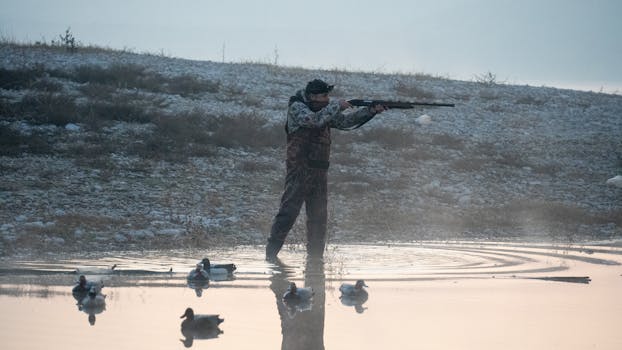
Stealth and strategic movement are key components of successful upland bird hunting. Move quietly and pay attention to wind direction to avoid alerting birds to your presence. Use natural cover to conceal your approach and try to predict the bird’s path to position yourself effectively for a shot. Remember, upland birds are highly alert and can be spooked easily, so every step and movement should be calculated.
Practice Your Shooting Skills
Good shooting skills are essential in upland bird hunting. Practice shooting at moving targets to mimic real hunting scenarios. Focus on improving your aim, shot timing, and reloading speed. Additionally, familiarize yourself with your shotgun’s particular handling and response. Regular practice at a shooting range can significantly improve your accuracy and confidence in the field.
Learn from Experienced Hunters
One of the best ways to improve your upland bird hunting skills is to learn from experienced hunters. Join hunting clubs, participate in hunting events, and engage with the hunting community. Experienced hunters can provide valuable insights and tips that are not found in books or online. Their practical advice and personal anecdotes can teach you advanced strategies and common mistakes to avoid.
Be Patient and Persistent
Patience is perhaps the most important virtue in hunting upland birds. Birds can be unpredictable, and hunting conditions can change rapidly. There may be days when you return empty-handed. However, persistence is key. Each hunting trip is a learning experience, and over time, your skills and instincts will sharpen, leading to more successful hunts.
Respect Wildlife and Practice Ethical Hunting
Always adhere to local wildlife regulations and practice ethical hunting. This includes respecting bag limits, hunting only during the designated seasons, and obtaining proper licenses. Ethical hunting ensures the conservation of wildlife populations and promotes a positive image of hunters in the community.
By incorporating these tips into your upland bird hunting practices, you can enhance your effectiveness and enjoy a more rewarding experience in the great outdoors. Remember, the key to successful hunting is a combination of knowledge, preparation, and respect for nature. Happy hunting!